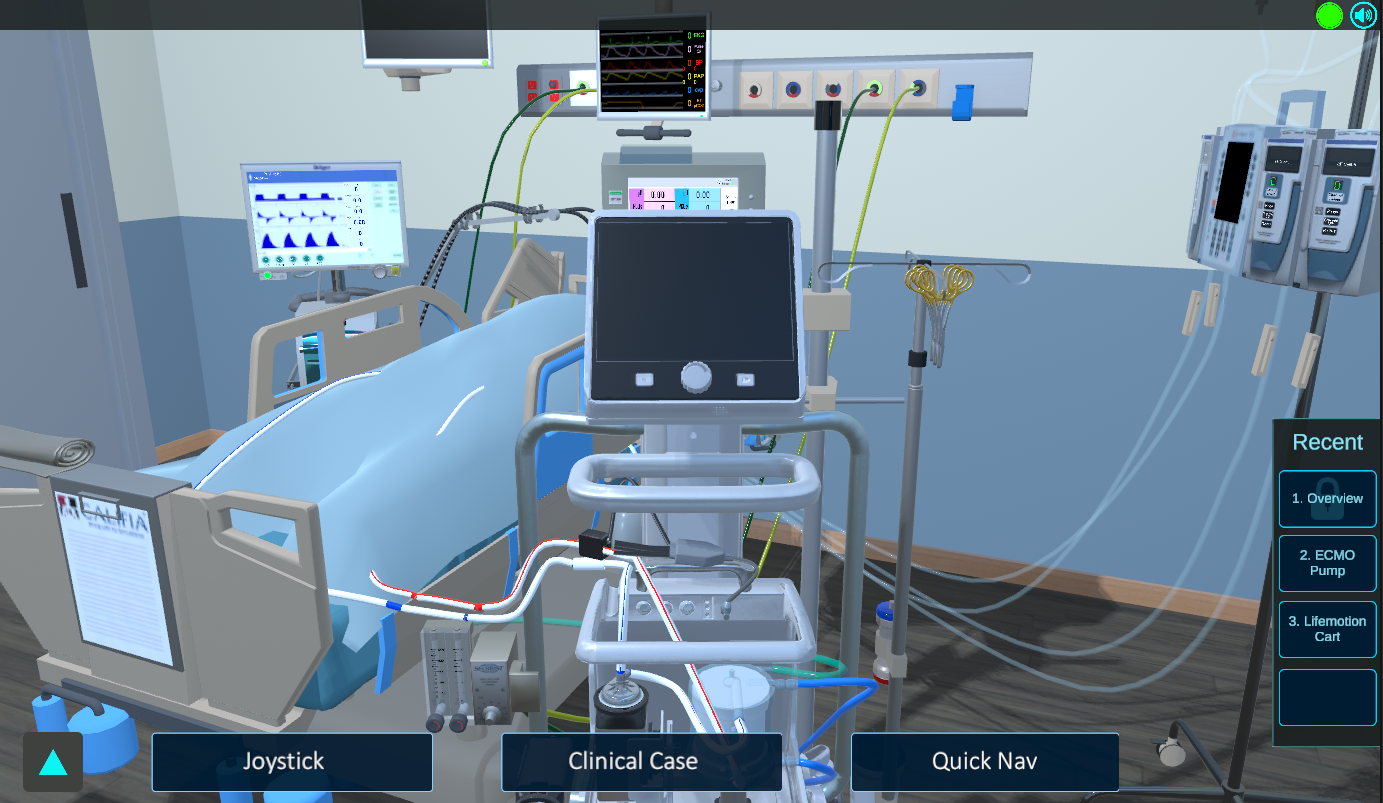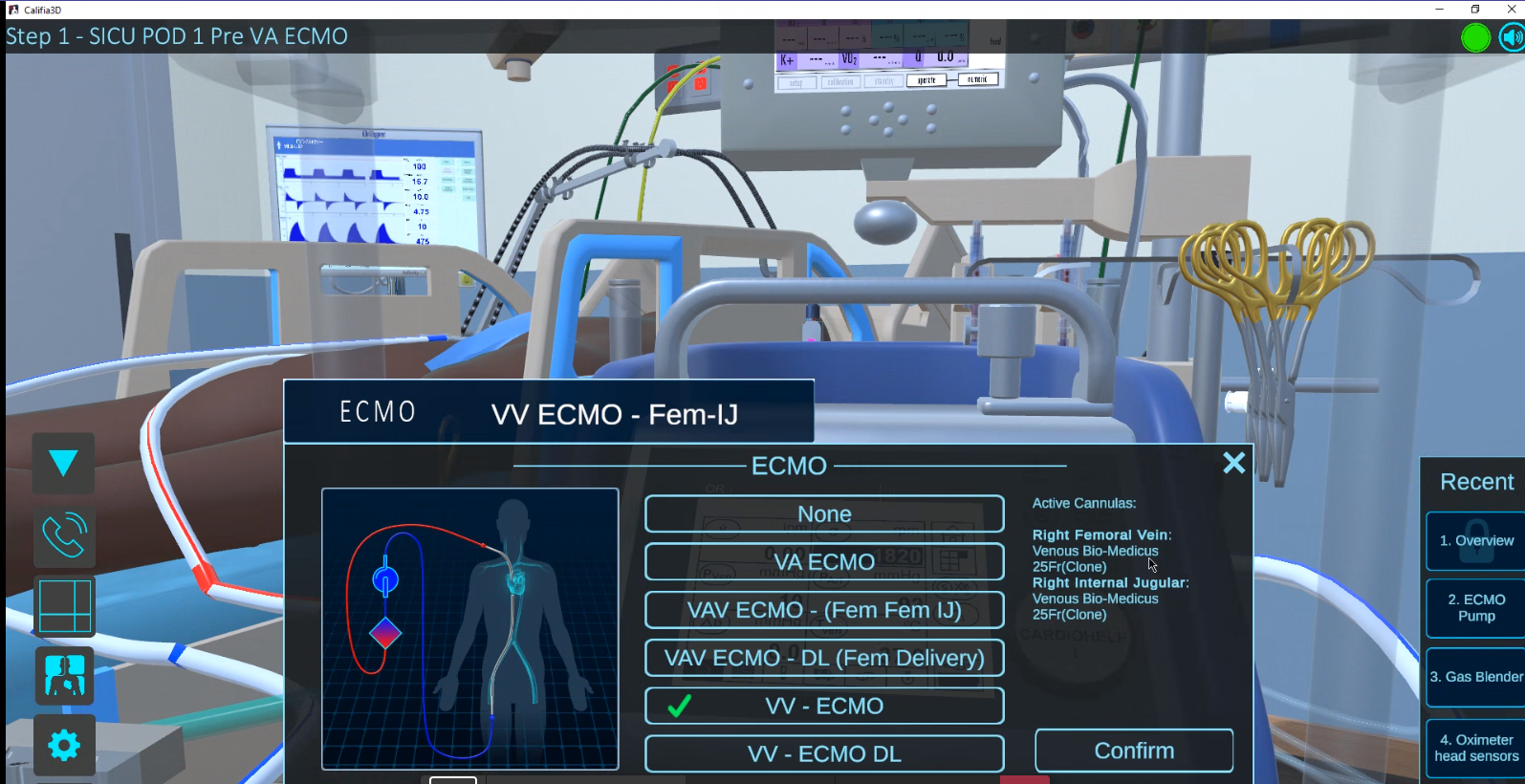
A medical simulation project focused on recreating an intensive care unit environment with multiple interconnected medical devices. The system simulated and visualized equipment such as oxygenators, ECMO pumps, oximeters, and blood circuits, giving medical staff the ability to interact with a realistic digital ICU room.
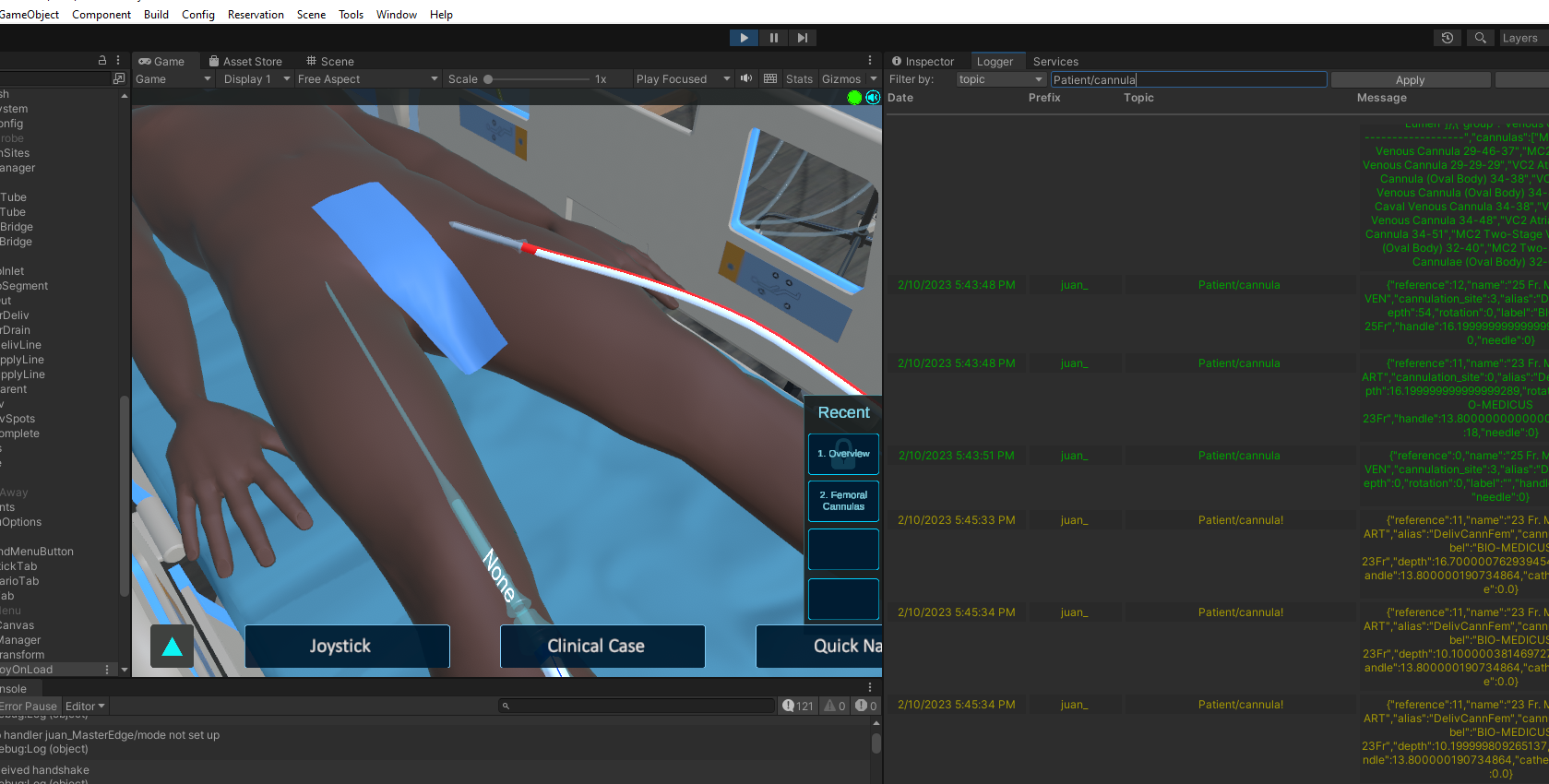
One of the most technically demanding aspects was building a 3D procedural generation system for medical tubing. Blood and oxygen tubes needed to adapt dynamically to the virtual ICU configuration, adjusting to room layout, device placement, and even the patient's height and weight.
The goal was to ensure that the simulation always produced accurate and believable circuits regardless of how the ICU was arranged. The procedural system had to satisfy both spatial constraints and medical accuracy simultaneously.
"Technical rigor for the systems. Medical accuracy for the people depending on them."
Real-Time Data Architecture
The simulation was implemented in Unity 3D as the frontend, receiving live data from a LabVIEW backend via an MQTT interface. This architecture allowed real medical device parameters such as blood flows, pump adjustments, and blood pressure to be streamed directly into the Unity visualization.
Medical personnel could monitor data in real time, interact with devices inside the simulation, and better understand how changes affected the patient's condition. The combination of procedural 3D modeling, real-time data streaming, and medical accuracy made this one of the most demanding and rewarding projects in the portfolio.